This blog may help people explore some of the 'hidden' issues involved in certain media treatments of environmental and scientific issues. Using personal digital images, it's also intended to emphasise seasonal (and other) changes in natural history of the Swansea (South Wales) area. The material should help participants in field-based modules and people generally interested in the natural world. The views are wholly those of the author.
Friday, 19 October 2012
Thursday, 11 October 2012
Costing the Earth
The UN has warned that climate change is dramatically increasing the costs of basic foods over substantial areas of the globe. Awful summers have disrupted wheat production (in terms of amount and quality) in America, Russia and the UK (http://www.guardian.co.uk/environment/2012/oct/10/un-rising-food-costs-weather?INTCMP=SRCH). Then, on top of that, some grain is diverted to make biodiesel.
Washed Away!
The plethora of insect life in Sikkim just serves to underline what a truly awful summer 2012 has provided for our invertebrates. Apparently, slugs and snails are thriving (http://www.guardian.co.uk/commentisfree/2012/jul/16/wildlife-apocalyptic-summer-damp-weather?INTCMP=SRCH) but butterflies and moths are in a spiral of serious decline.
Monday, 8 October 2012
Friday, 5 October 2012
More Critters from Sikkim
Got a nice shot of a wild Hanuman langur monkey and some close ups of a type of dove , a yellow-fronted bird and a Drongo (birds). Butterflies were also spectacular including this Paris peacock (Papilio paris) and a male Yellow orange-tip (Ixras pyrene). Shot a very weird dragonfly (a female Anisopteran Palponeura seximaculata ) and some interesting relatives of the grasshopper (colour morphs of Mecopoda).
Sunday, 30 September 2012
Sunday, 23 September 2012
Himalayan Action
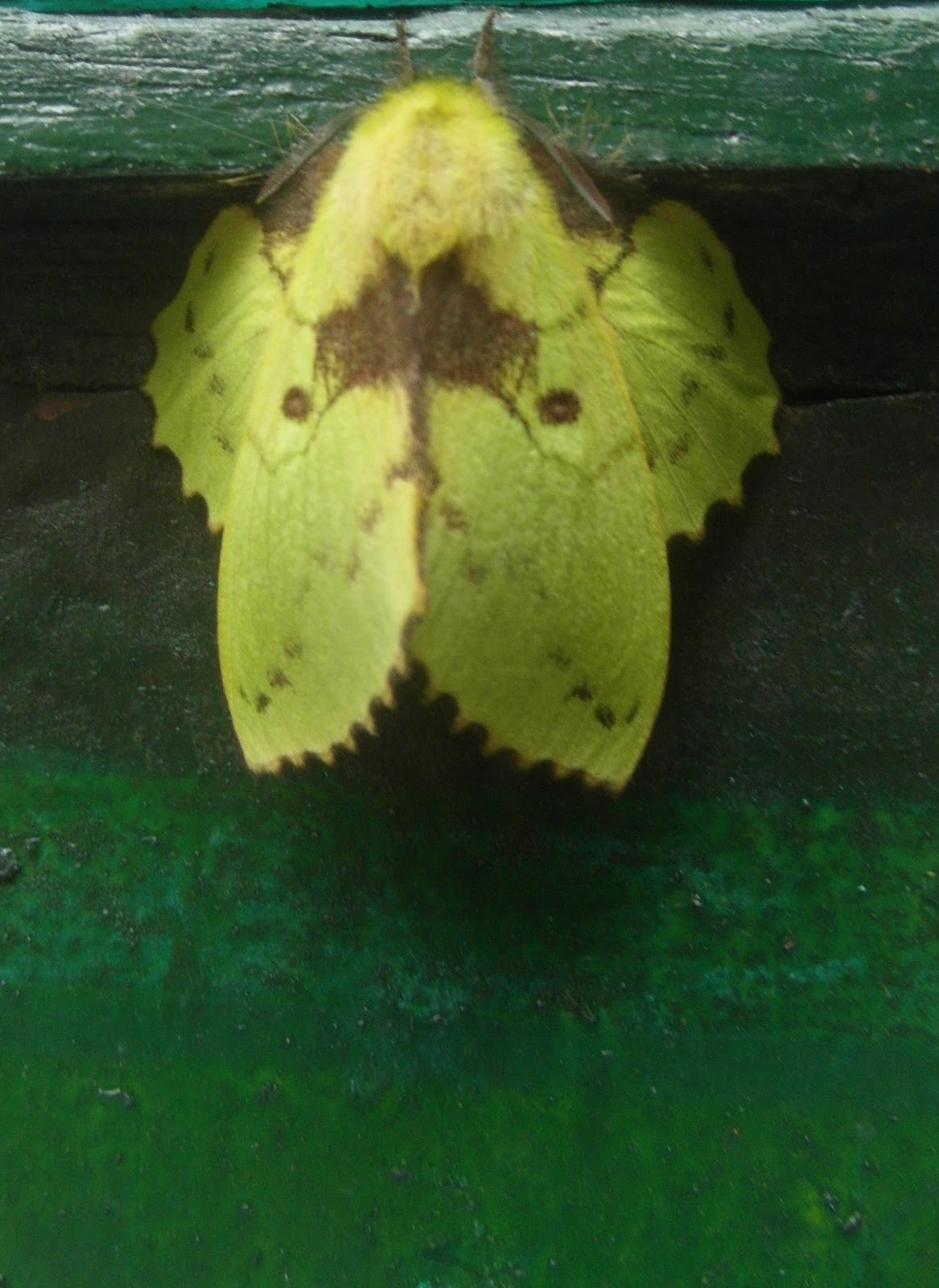
Just returned from 10 days in Gangtok (Sikkim). Ran a very successful moth trap at the Hidden Forest Retreat and a few of the more striking images from here and elsewhere on the visit are included here. The first moth has the splendid name of Baorisa hieroglyphica and was actually found at the Guru Padsamabhava statue that functions like a giant moth trap when illuminated at night. The second moth looks exactly like a rolled leaf from the side. Number 3 is a Lappet moth from Rumtek monastery. Number 4 is Asota caricae and the 5th is probably Vamuna alboluteola. The 6th picture is of day-flying moths with very striking sexual dimorphism from a puja near the city centre. Lastly, there is a hawk moth larva from the gardens of our accommodation. There were also lots of other vertebrates and invertebrates that will feature as I sort them through. This is only a taster!
Subscribe to:
Posts (Atom)
-
I n the UK and US, a pparently popular and successful vegan/vegetarian restaurants are reportedly closing or adding meat to their menus ( ...
-
Interesting news that NICE has approved 'in record time' the NHS adoption of a cocktail of Bristol-Myers-Squibb immunotherapy dr...