Friday, 19 October 2012

Recent Lack of Actitivity

Apologies for recent dearth of posts, the Sikkim visit was followed by a stay in hospital with gastroenteritis (un-related to India) which has become linked to a new AF heart condition and low blood sodiums. Hope to sort myself out soonest.

Thursday, 11 October 2012

Costing the Earth

The UN has warned that climate change is dramatically increasing the costs of basic foods over substantial areas of the globe. Awful summers have disrupted wheat production (in terms of amount and quality) in America, Russia and the UK (http://www.guardian.co.uk/environment/2012/oct/10/un-rising-food-costs-weather?INTCMP=SRCH). Then, on top of that, some grain is diverted to make biodiesel.

Washed Away!

The plethora of insect life in Sikkim just serves to underline what a truly awful summer 2012 has provided for our invertebrates. Apparently, slugs and snails are thriving (http://www.guardian.co.uk/commentisfree/2012/jul/16/wildlife-apocalyptic-summer-damp-weather?INTCMP=SRCH) but butterflies and moths are in a spiral of serious decline.

Monday, 8 October 2012

Seeing the Changes 532

The Gower ponies and their offspring have started to block movement on the Bynea cycle path! Hooligan horses!

Friday, 5 October 2012

More Critters from Sikkim

Got a nice shot of a wild Hanuman langur monkey and some close ups of a type of dove , a yellow-fronted bird and a Drongo (birds). Butterflies were also spectacular including this Paris peacock (Papilio paris) and a male Yellow orange-tip (Ixras pyrene). Shot a very weird dragonfly (a female Anisopteran Palponeura seximaculata ) and some interesting relatives of the grasshopper (colour morphs of Mecopoda).

Sunday, 30 September 2012

Seeing the Changes 531

Welcomed back to Loughor from my travels by driving rain and a bloom of Himalayan balsam (Impatiens glandulifera) at Penclacwydd. Near the Loughor bridge at Bynea, Gower ponies tucked into the local vegetation.

Sunday, 23 September 2012

Himalayan Action


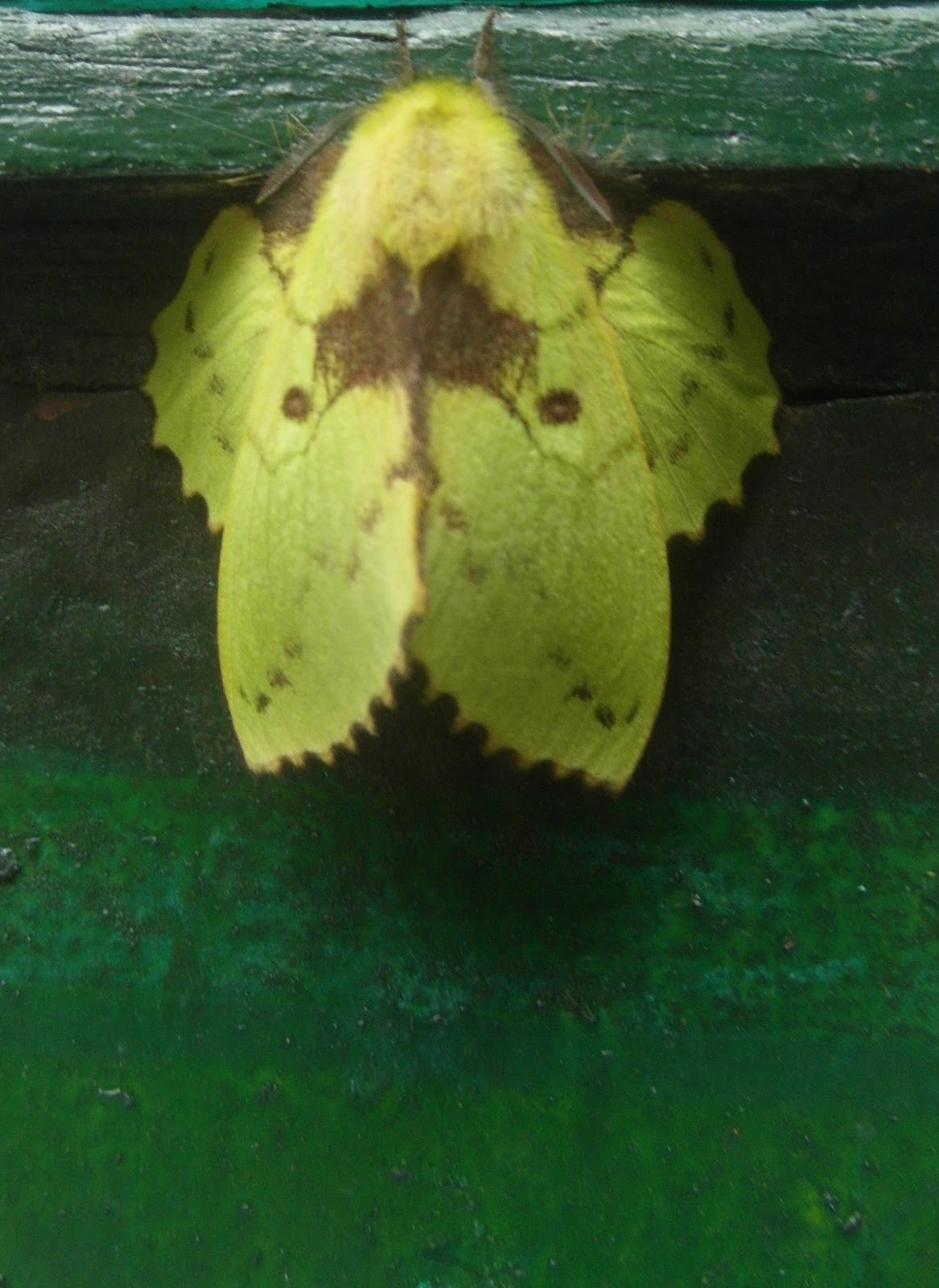
Just returned from 10 days in Gangtok (Sikkim). Ran a very successful moth trap at the Hidden Forest Retreat and a few of the more striking images from here and elsewhere on the visit are included here. The first moth has the splendid name of Baorisa hieroglyphica and was actually found at the Guru Padsamabhava statue that functions like a giant moth trap when illuminated at night. The second moth looks exactly like a rolled leaf from the side. Number 3 is a Lappet moth from Rumtek monastery. Number 4 is Asota caricae and the 5th is probably Vamuna alboluteola. The 6th picture is of day-flying moths with very striking sexual dimorphism from a puja near the city centre. Lastly, there is a hawk moth larva from the gardens of our accommodation. There were also lots of other vertebrates and invertebrates that will feature as I sort them through. This is only a taster!