Tuesday, 6 May 2014

Brazilian Chainsaw Massacre?


It's amazing how, 'democratic' politics can over-ride attempts to conserve environments. There is disturbing news from Brazil, where a politician dubbed the 'chainsaw queen', who has presidential aspirations is alledging (without any evidence) that environmentalists, indigenous indian groups and landless peasants are all working for 'foreign interests' when they oppose further enroachments on the rainforest. Strangely enough, she just happens to own and run a large ranch and is the head of the Confederation of Agriculture and Livestock. She has reportedly been instrumental in weakening   Brazil's Forest Code and is enthusiastic about extending the road network through the forest, clearance for GM crops and extending the power of agribusiness. All this in the name of reducing food costs. I can't help feeling a tad pessimistic about the survival of an extensive, functional rainforest as the lowest denominator tends to win.http://www.theguardian.com/environment/2014/may/05/brazil-chainsaw-queen-katia-abreu-amazon-deforestation

The Lair of the White Worm


Forget Bram Stoker! There are reports that Gran Canaria is being over-run by the progeny of albino Kingsnakes (originally from California) that have either escaped or have been released by pet owners (http://www.theguardian.com/environment/2014/may/05/invasion-albino-snakes-threatens-gran-canaria-wildlife). These snakes that can reach 1.5 m have apparently increased enormously in numbers and are decimating bird life, rabbits and unique lizards on the island. Even though they are albino, they appear to thrive as they have no predators on Gran Canaria. There is now a programme to try to control the snakes but, as they are largely subterranean, this seems a potentially insolveable problem Yet another example of the consequences of human-mediated introductions!

Sunday, 4 May 2014

Fraudenstein Food


It is reportedly easier for criminal groups to make big money by selling adulterated food than to deal in illegal drugs (http://www.theguardian.com/world/2014/may/03/crime-gangs-target-food-fraud-draft-eu-report). This is because a) the volume of activity is much higher, b) the level of testing for fraudulent activity is relatively low and c) the penalties after detection are modest. Apparently, criminals are becoming sophisticated in spotting 'a main chance' and tend to focus on areas such as virgin olive oil (the biggest area where adding a little chlorophyll to cheap oil can produce massive profits), organic vegetables, fish, red wine, saffron, milk, vodka, tea, coffee, honey and fruit juice. It is not only that people are cheated of their money, there have actually been deaths from bootleg alcohol and melamine-contaminated baby milk (the melamine contains nitrogen, confusing tests for protein content). Suggestions that people (especially the poor) buy locally and do their own cooking are not realistic on a large scale. I do think that supermarkets and governments need to increase the level and sophistication of testing and that penalties should more realistically reflect the natures of the crimes.

Saturday, 3 May 2014

Seeing the Changes 862


Drinker moth larvae (Philudoria potatoria) were much in evidence in Penclacwydd.

Birder's Bonus 143


On Loughor estuary, Black-tailed godwit (Limosa limosa) appeared to be changing into summer plumage.

Seeing the Changes 861


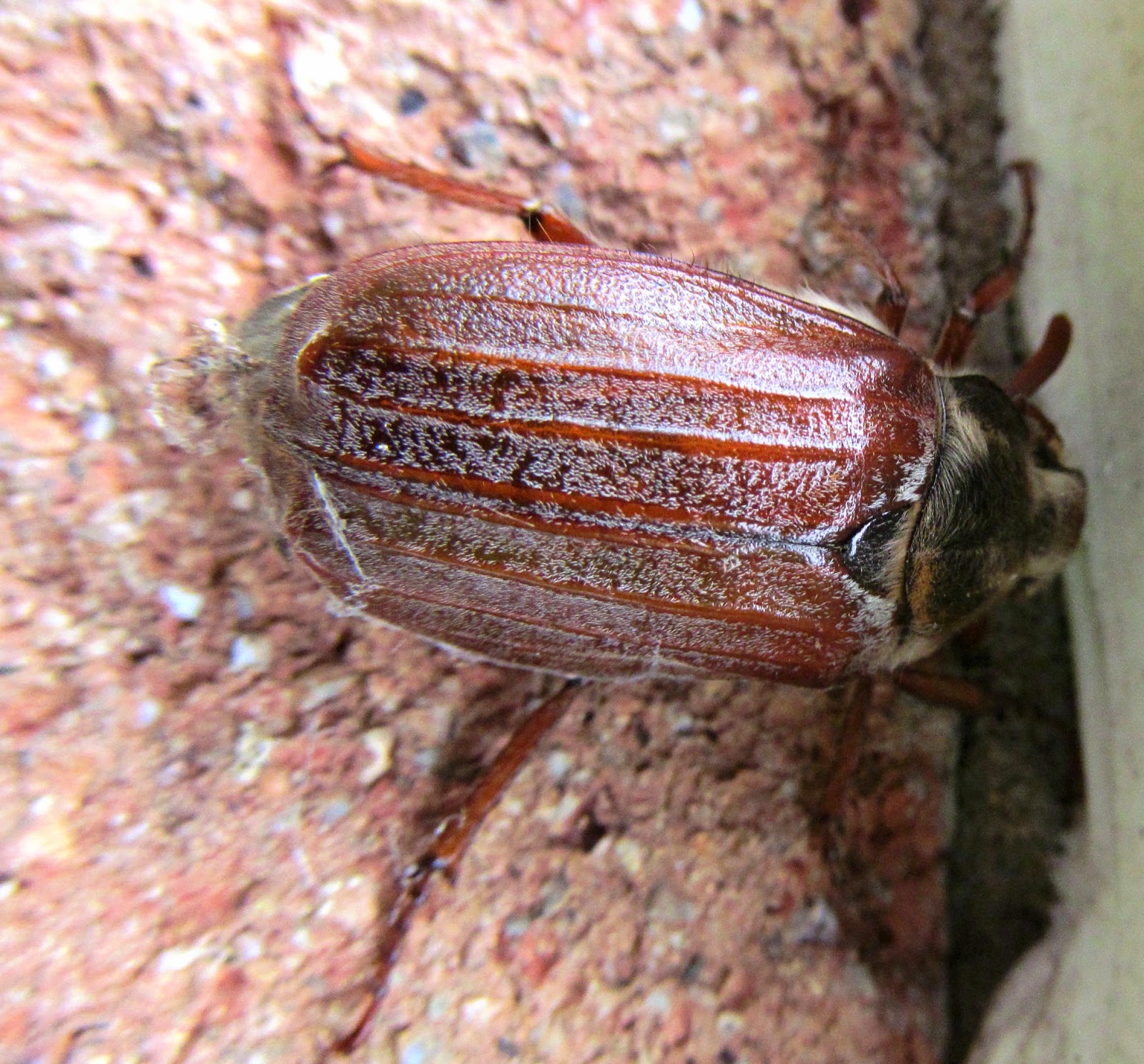
It's May. So time for a nocturnal visit by a Cockchafer (Melolontha melolontha)!

Thursday, 1 May 2014

Pre-Medical?


It's not exactly a new story but WHO have reiterated their warning that the development of antibiotic-resistant strains of bacteria could 'return us to an age where even mild infections killed' (http://www.theguardian.com/society/2014/apr/30/who-calls-urgent-action-antibiotics-antimicrobial-resistance). People (especially the very young or the aged) in developed countries would die in increasing numbers from conditions like diarrhoea and pneumonia. It is problematic that a) bacteria, because of their rapid life-cycles and ability to transfer genes to each other, evolve very quickly; b) these infective agents are rapidly transported by air travel; c) there is still much overuse of existing antibiotics in medicine and farming (giving resistant strains opportunities to arise) and d) the incentives for pharmaceutical companies to work on genuinely new alternatives is limited (as any new items would have to be curtailed in their use to limit resistance development). WHO do suggest an increased role for improved hand sanitation but that seems a rather desperate ploy.