+head+SU.jpg)
Wednesday, 29 September 2010
Coming Back


Seeing the Changes 333

Tuesday, 28 September 2010
Longleat Lingers


Highlights of a Last Dorset Field Course?


,+Little+egret+(Egretta+garzetta)++etc+in+flight+Brownsea+Island.JPG)
+near+tern+island+Brownsea.JPG)
+dips+beak+in+lagoon+Brownsea.JPG)

+toadstool+Monkey+World.JPG)
+in+Bug+bottle+Broadcroft.JPG)


+walk+on+Chesil+Bank.JPG)

Two days from retirement and I have just returned from the annual Swansea field course that takes in locations reached from the Island of Portland (with Chesil Beach). Saw Turnstone (Arenaria interpres) on Chesil Bank. At Abbotsbury Swannery got to hold a Mute swan (Cygnus olor) for the last time. Radipole RSPB reserve had massed cormorant on the little island. At Broadcroft Butterfly Quarry got a nice shot of a basking Speckled wood (Pararge aegeria) and found a Slow worm (Anguis fragilis). In addition to the primates, there were masses of fungi at Monkey World including Fly agaric (Amantia muscaria) and Boletus edulis (guess which one should eat!). Brownsea Island was special with Greenshank (Tringa nebularia) and Redshank (Tringa totanus) in the lagoon with a massed flight of Spoonbill (Platalea leucorodia), Avocet (Recurvirostra avosetta) and other species above it. There were also Leccinium scabrum fungi there and a good show by the Red squirrel (Sciurus vulgaris).
Saturday, 18 September 2010
Seeing the Changes 332


Flights of Fancy?
+threat+frontal.jpg)
The report of a Pembrokeshire swan (nicknamed by the press 'Hannibal') being 'hyperaggressive' and attacking (and sometimes killing) other birds raises a number of questions (http://www.bbc.co.uk/news/uk-wales-south-west-wales-11331964 ). Some of the commentators have even speculated that there must be some contamination in the water to 'cause' this 'abnormal' behaviour. Mute swans (Cygnus olor) are often highly territorial and intolerant of other waterbirds (especially their own species). A Google search will confirm that such behaviour is frequently recorded (see 'the ASBO swan and 'Hissing Sid'). Even atypically maintained swans such as those at Abbotsbury in Dorset are not free of 'swanecidal' behaviour. Territoriality is used by many species as a means of getting access to limited resources (in this case the grass and pondweed around a nesting site in order to breed successfully and to rear offspring. The species clearly shows variability in this characteristic which is actually highly beneficial to the individual, its mate and its progeny. It is humans that object to the bird doing these actions (it's not 'nice' for a 'peaceful' bird to behave this way).
Wednesday, 15 September 2010
Topsy-Turvey
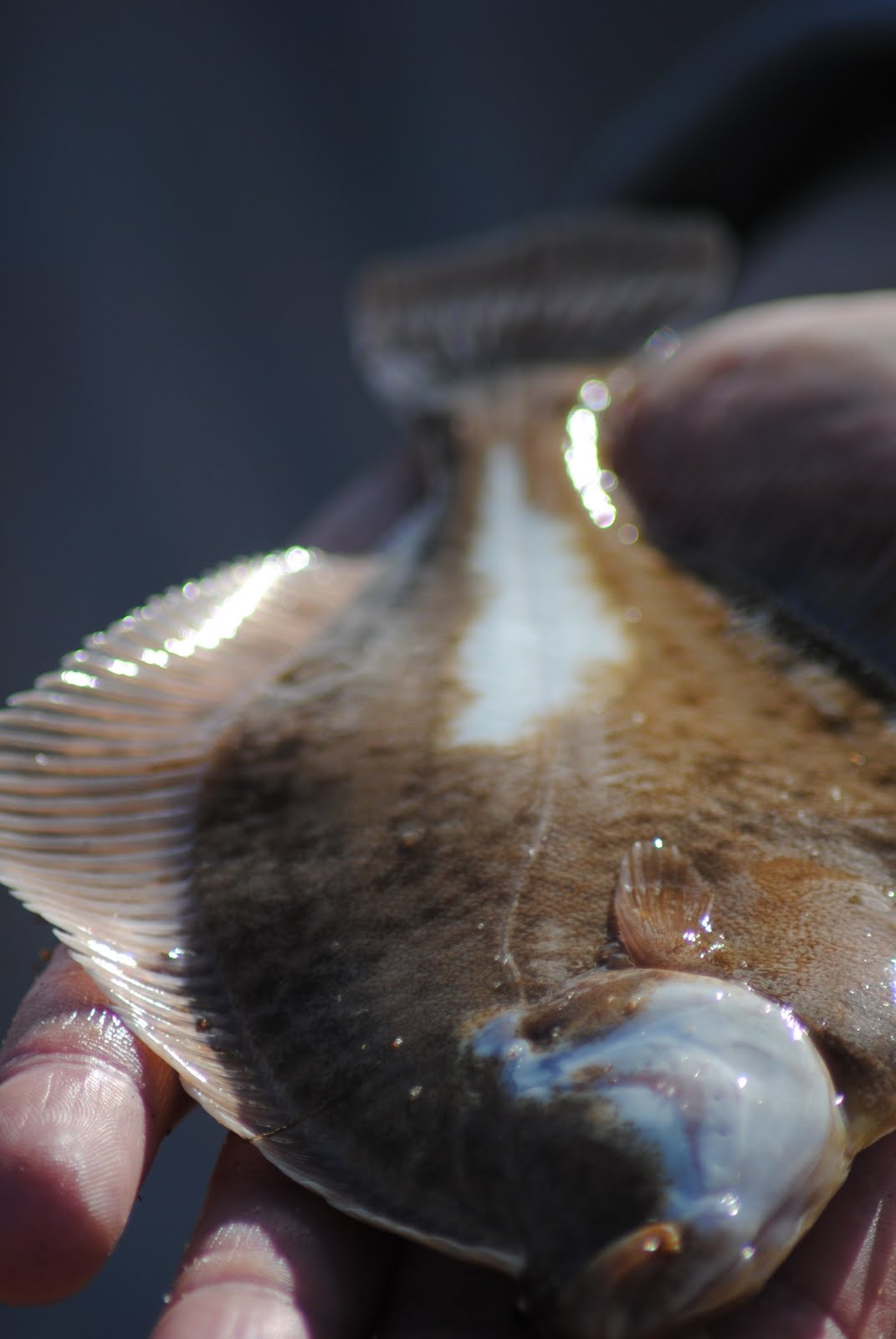

One of the Flounders (Platichthys flesus) caught in Northumberland had dark colouration on both sides (not the usual white on the 'bottom' side after the eyes had migrated) . This abberration seems to be quite common in this area.
Subscribe to:
Posts (Atom)

-
I n the UK and US, a pparently popular and successful vegan/vegetarian restaurants are reportedly closing or adding meat to their menus ( ...
-
 Interesting news that NICE has approved 'in record time' the NHS adoption of a cocktail of Bristol-Myers-Squibb immunotherapy dr...
%20mating%20NWCW.jpg)
