Friday, 10 August 2018

Seeing the Changes 1356

For a second year, the local Horse chestnuts (Aesculus hippocastanum) look like this. Careful examination of the leaves, found tiny leaf mining larvae. Crops of conkers are reduced.

Wednesday, 8 August 2018

Seeing the Changes 1355

Elder (Sambucus nigra) was in fruit in Bynea and popular with the Wood pigeons.

Tuesday, 7 August 2018

Cat on a Hothouse Roof

Climate scientists, in a recent scholarly article, have suggested that, on some models, anthropogenic-mediated increases in the mean global temperature beyond a modest point might well lead to changes that spiral out of control to generate a 'hothouse' condition for the planet(https://www.theguardian.com/environment/2018/aug/06/domino-effect-of-climate-events-could-push-earth-into-a-hothouse-state). This would be a consequence of some changes producing contributions to climate change (e.g. the release of methane from permafrost locations or the reduced reflection of solar energy by the loss of ice from polar regions) that would be virtually impossible for humans to quickly reverse (certainly, reducing human release of 'greenhouse gases' would not, at this time, reduce the average global temperature and it would continue to rise). Such a hothouse condition would result in a loss of fertile land by increasing the sea level making it impossible to feed the global human population (quite apart from their being directly exposed to risks associated with climate change e.g. flooding and fires).

Monday, 6 August 2018

Hardly the Bee's Knees

News that the US government is to remove the ban on neonicotinoid insecticides is worrying (https://www.theguardian.com/environment/2018/aug/04/trump-administration-lifts-ban-on-pesticides-linked-to-declining-bee-numbers). These chemicals not only reduce the numbers of bees but have also been shown to profoundly disrupt the behaviour of these essential pollinators. Science seems to have little relevance in much of environmental decision making. Who speaks loudest seems to get the decisions.

Sunday, 5 August 2018

Seeing the Changes 1354


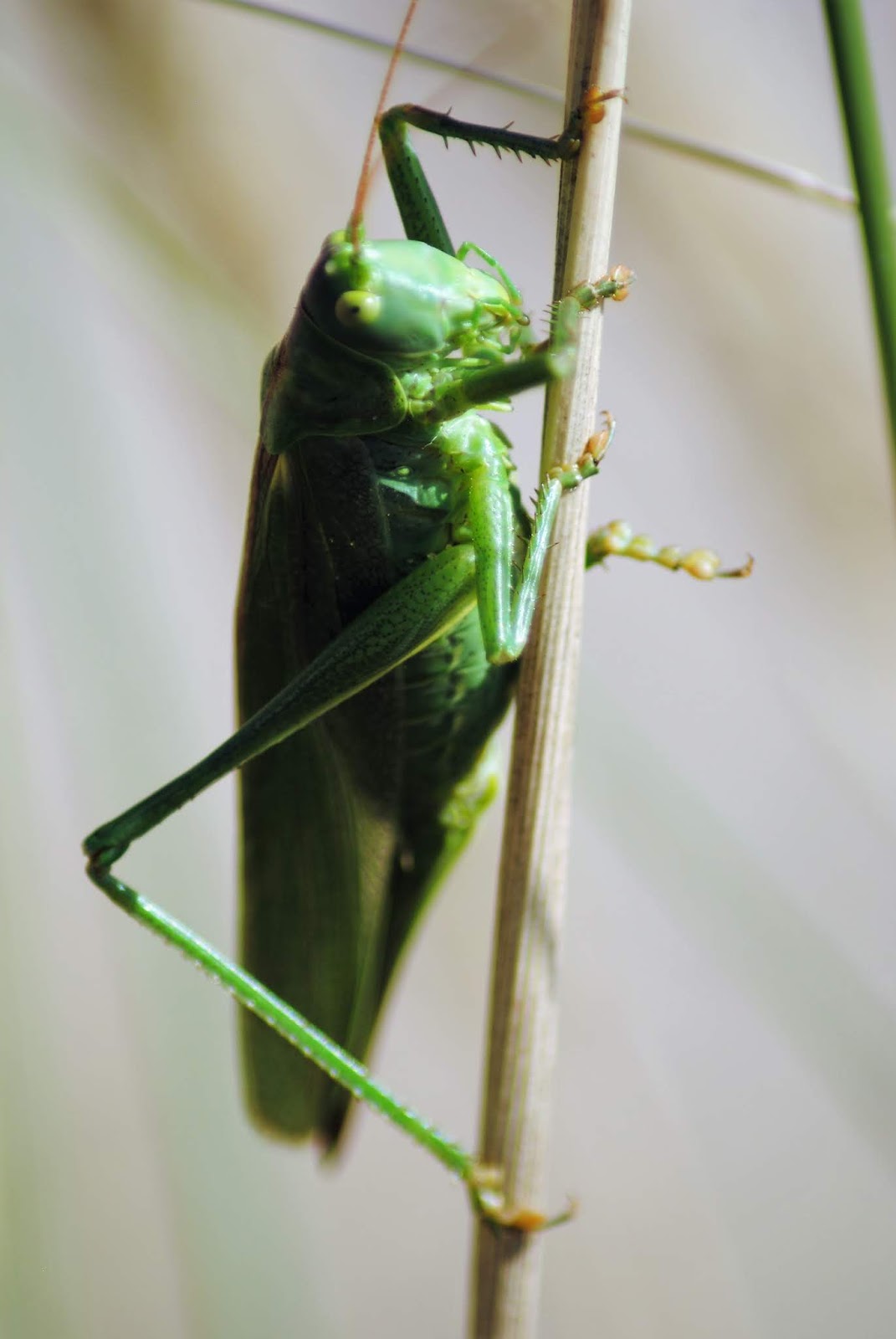
Hot in Oxwich on the Gower. Stone bramble (Rubus saxatillis) was in fruit. Critters spotted included the Great green bush cricket (Tettigonia viridissima); Small heath (Coenonympha pamphilus) Brown argus (Aricia agestis) and the fly Chrysotoxum bicinctum.

Saturday, 4 August 2018

There's Plastic and There's Plastic

Much of plastic food packaging is reportedly non-recyclable according to at least some local authorities (https://www.bbc.com/news/science-environment-45058971?intlink_from_url=https://www.bbc.com/news/topics/c6lpgw300llt/plastic-pollution&link_location=live-reporting-story). For example, yoghourt pots are generally incinerated (hopefully with the use of carbon-capture technologies) and you get an occasional weirdness such as plastic bottles being recycled but not their tops. Black food trays are also problematic as they are not identified by some automated sorting systems. As there is a public appetite to reduce plastic pollution, I  think that is largely up to food producers and supermarkets to try to ensure that food packaging is a) necessary and b) if necessary, recyclable. I think it is a bit much to blame cash-strapped local authorities for confusing things by their having a plethora of systems for recycling.

Friday, 3 August 2018

Fracking to the Heart

It now appears that atmospheric pollution, even in relatively rural areas, not only damages the lungs but has a profound negative impact on the human heart (https://www.theguardian.com/environment/2018/aug/03/air-pollution-linked-to-changes-in-heart-structure). The changes increase the risk of heart disease in many people (probably in other animals around us also) and it yet another cause of illness and premature death. When this observation is combined with the claim that the UK Government buried a report for 3 years that concluded that fracking (the extraction of gas from shale deposits) would greatly increase atmospheric pollution around the wells (https://www.theguardian.com/environment/2018/aug/02/buried-uk-government-report-finds-fracking-increases-air-pollution), only releasing it after granting the first fracking licence in Lancashire. Economics clearly trumps our health (I seem to remember that a Mr Johnson, when mayor of London, was reported to have sat on a report of air pollution levels around schools in the city). The strange thing is that the substantial costs (not to mention the agony) of the health problems never appear to be factored into such economic calculations.