This blog may help people explore some of the 'hidden' issues involved in certain media treatments of environmental and scientific issues. Using personal digital images, it's also intended to emphasise seasonal (and other) changes in natural history of the Swansea (South Wales) area. The material should help participants in field-based modules and people generally interested in the natural world. The views are wholly those of the author.
Saturday, 19 February 2011
Seeing the Changes 348
In Loughor, there was the first flowering of the Common dog violet (Viola riviniana). There were impressive mosses in Bynea and an early Goat willow (Salix caprea) catkin was evident in Penclacwydd.
Friday, 18 February 2011
Yew Turn
The UK Government has withdrawn its proposed privatisation of the English woodlands (http://www.guardian.co.uk/environment/2011/feb/17/forestry-sell-off-policy-u-turn?INTCMP=SRCH ). It seems that the considerable public pressure from media friendly groups and political opposition has caused this change. I guess that the majority of these people didn't believe that the proposed access and management 'safe-guards' that were to be 'built in' could be relied upon. Perhaps there is hope for the badgers?
Thursday, 17 February 2011
Seeing the Changes 346
A spring-like day. In Penclacwydd, Coltsfoot (Tussilago farfara) was in flower. It was joined, in Loughor, by Lesser celandine (Ranunculus ficaria). A Common damsel bug (Nabis rugosus) came to the light in Loughor whilst a Drone fly (Eristalis tenax) fed on the Garden crocus. In Penclacwydd, a Seven-spot ladybird (Coccinella 7-punctata) sunned itself on a fence.
Tuesday, 15 February 2011
Wood bind
The debate about the Government's plan to sell off woodland (largely from the Forestry Commission?) in England continues to rumble on with the Woodland Trust posting an online petition against the move (http://www.woodlandtrust.org.uk/en/Pages/default.aspx ). I suppose much depends on who would do the buying. People interested in trees (largely pines) as a 'cash crop', are hardly likely to have public access and biodiversity high on their agendas. One could, however, make the case that some Forestry Commission plantations could be managed in more interesting ways with a greater emphasis on oaks and beeches etc. I am still not convinced that commerce and public enjoyment of the countryside is a happy mix.
Monday, 7 February 2011
Seeing the Changes 345
Common chickweed (Stellaria media) was in flower in Loughor and Common field speedwell (Veronica persica) in bud in Bynea.
Wednesday, 2 February 2011
His Lordship
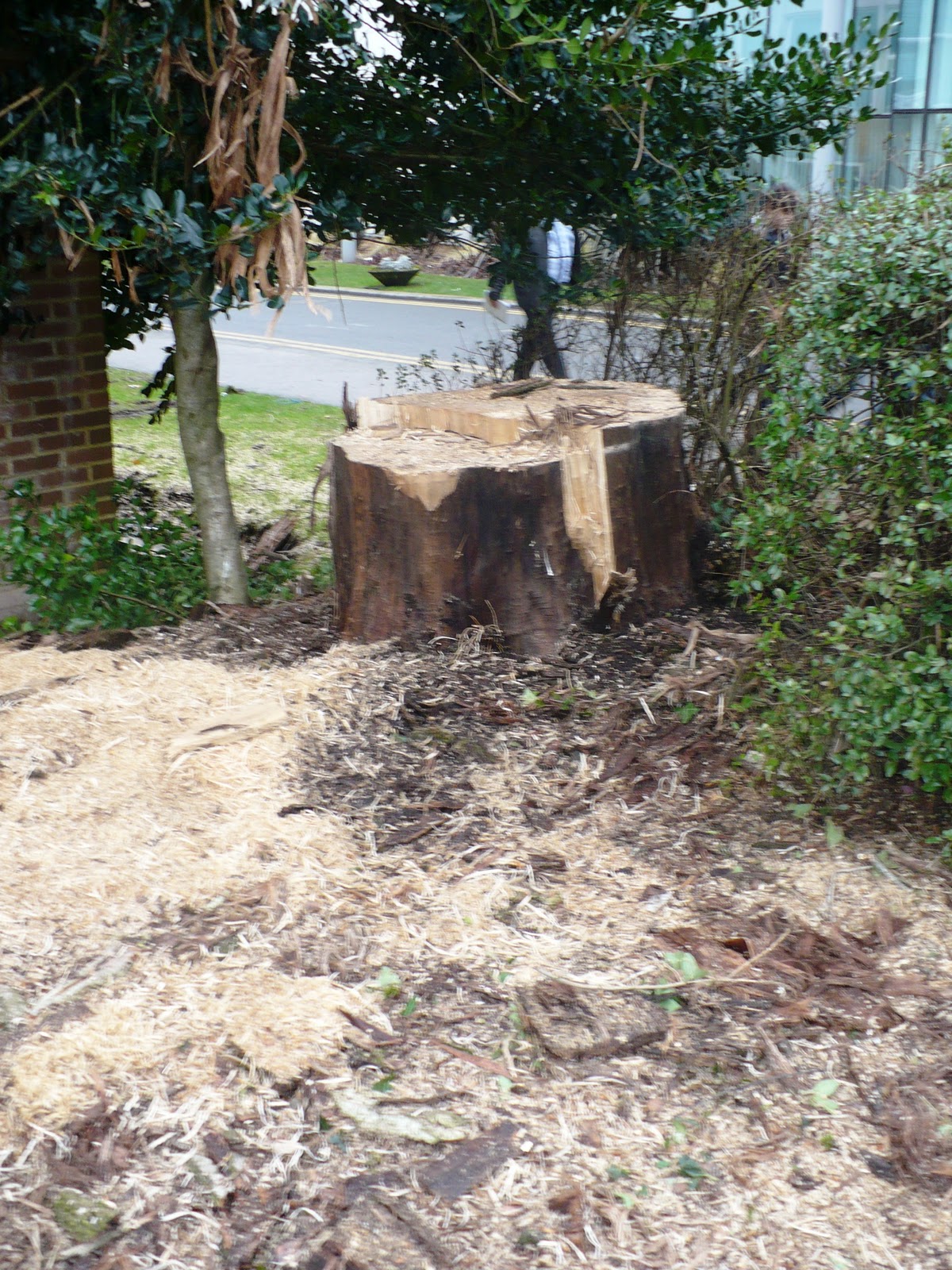
One might argue that the Swansea University campus is getting 'greener' as Dan Forman recorded a Mink (Neovison vison) dining on an eel in the water feature in front of the Vivian Tower. Of course, the Mink is a North American species and its presence is bad news for any nesting birds on the campus or in Singleton Park. The sighting does suggest that human disturbance is not much of an issue on parts of the site. This interesting carnivore's ancestors presumably escaped from or was 'liberated' from a mink farm (they are a source of regal ermine). The 'greener' epithet is, however, challenged somewhat by the cutting down of some of our more substantial trees.
Subscribe to:
Posts (Atom)
-
The organisation, Surfers Against Sewage (SAS) give evidence in a report, that the UK's privatised water companies release raw sewage...
-
Interesting news that NICE has approved 'in record time' the NHS adoption of a cocktail of Bristol-Myers-Squibb immunotherapy dr...