Thursday, 20 April 2023

Hot News From the Hot Spring?

Cyanobacteria, from hot volcanic springs on the Italian island of Vulcano, have been shown 'eat' carbon dioxide 'astonishingly quickly' (https://www.theguardian.com/environment/2023/apr/19/volcanic-microbe-eats-co2-astonishingly-quickly-say-scientists). All cyanobacteria are, of course, photosynthetic. Their work, in much geological times, probably pumped the oxygen into the ancient atmosphere. Extremophil cyanobacteria, as found in hot springs, might well be remnants of ancient bacterial populations. It will be interesting to establish whether these, recently studied cyanobacteria, are really much more efficient at removing carbon dioxide than commoner species. Afterall, photosynthesis is photosynthesis! If they really are more efficient, it may indeed, be possible to use them to remove excess carbon dioxide from the current atmosphere.

More Than One Way to Skin a Cat?

Feral cats are really problematic for wildlife in many parts of the world. They kill many more birds and small mammals than they eat. They are a particular threat to endangered native species in places like New Zealand. A programme aimed at killing feral cats, in that country, has attracted criticism from animal welfare groups (https://www.bbc.co.uk/news/world-asia-65320162). A prize of NZ$250 (circa £124) was offered to individuals, aged 14 years and under, killing most feral cats between mid-April and the end of June. This has now been cancelled to the relief of the New Zealand Society for the Prevention of Cruelty to Animals and others. It's certainly true that cruelty to animals can lead to crelty to people. Children are impressionable and shouldn't be encouraged to kill for a financial reward. Perhaps, the same applies to some folk over 14 years of age. The problem remains, however, that feral cats will have to be eradicated from New Zealand's environments by someone. Perhaps it should be done by qualified environmentalists rather than by a public competition. Remember, that feral cats could be regarded as causing animal 'cruelty'.

Wednesday, 19 April 2023

Seeing the Changes 1769

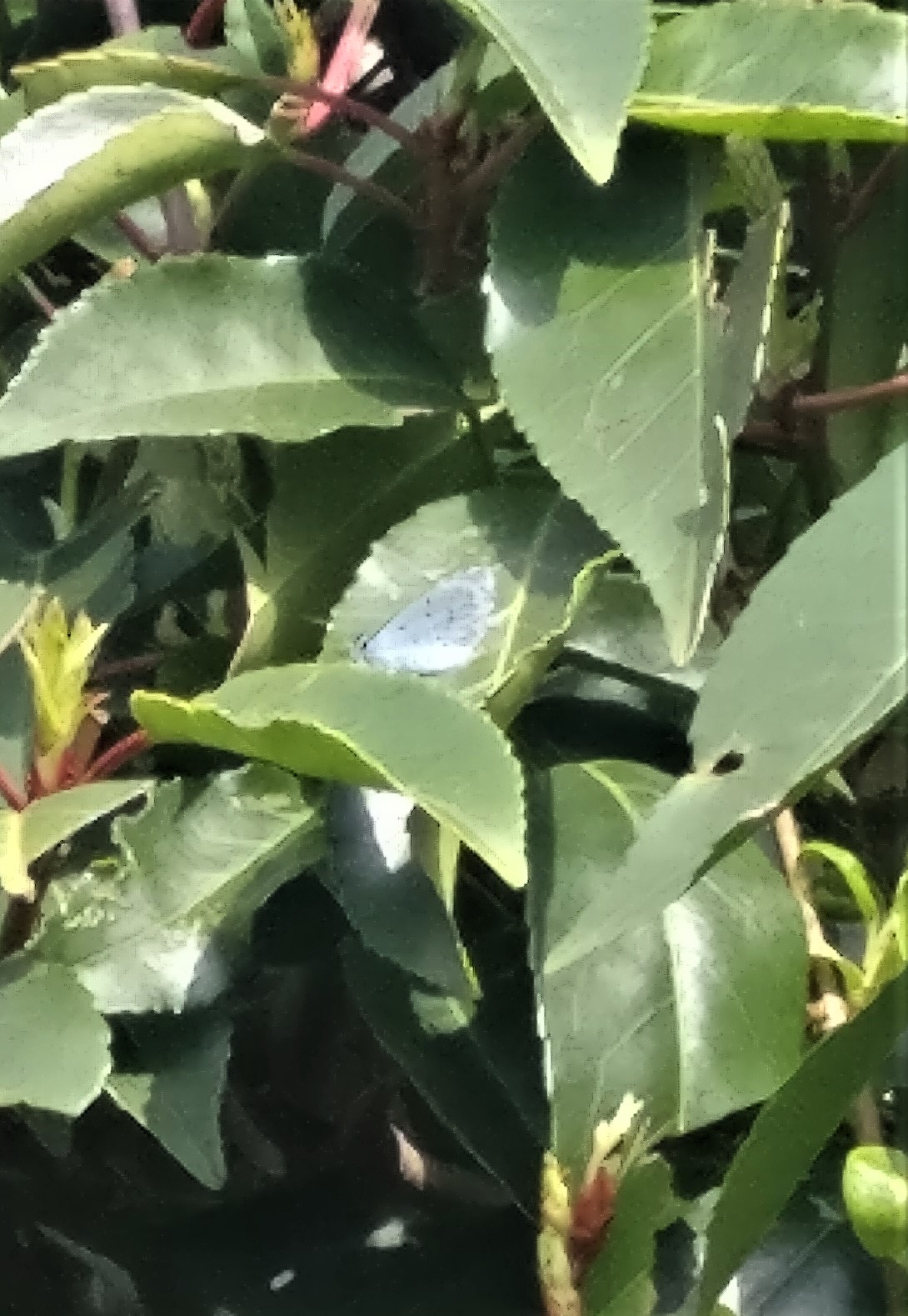
A Holly blue (Celastrina argiolus) in my Loughor garden. Only the second butterfly I have seen this year.

Political 'Chickens' Come Home to Roost?

The UK has Europe's 3rd highest obesity rate (after Malta and Turkey). Since 1992, UK governments have produced 14 strategies, to deal with obesity. Since that time, they have also generated 689 policies to deal with the problem and have created, but later abolished, 14 different bodies to monitor 'progress'. A report by the Institute for Government Research (IfG) thinktank concludes that consistent policy failures to tackle obesity are a consequence of political fear (https://www.theguardian.com/politics/2023/apr/19/nanny-statism-fears-behind-uks-30-year-failure-to-tackle-obesity-report-says). The (IfG) thinks that UK politicians (of all stripes) have been desperate not to be accused of 'nanny statism'. A 'nanny' is a woman paid to care for children by a rich family. The vast majority of UK folk, have no experience of a nanny. 'Nanny statism' is the 'crime' of government telling folk what they ought to do, rather than leaving things to 'personal choice'. Regulating food intake has long been viewed as being too personal for state regulation. 'Nanny statism' has been dragged out as an argument against obesity initiatives, by some food producers and sections of the right-wing press. Things, however, can change. Once upon a time, bans on cigarette smoking and the enforcing car seatbelt regulations were criticised as 'nanny statism'. One can only hope that obesity's time has come. The costs of not achieving any progress are now too great. Obesity's consequences now cost the UK's National Health Service circa £6.5bn per year.

Switching the Lights Off Across England?

As Devi Sridhar (Edinburgh University) points out, the UK is a (relatively) rich country. It consequently seems more than a little bizarre, that hundreds of people in England are going blind (https://www.theguardian.com/commentisfree/2023/apr/19/british-people-going-blind-doctors-tory-cuts) Sridhar maintains that the increased incidence of blindness is mainly a consequence of cuts in National Health Service (NHS) provision. Eye conditions, like macular degeneration, can be treated. Patients, however, only get effective treatment, if they have timely access to services. The current NHS backlog for ophthalmology appointments in England is the second longest for any ailment. In most cases, once people have become blind, the condition is permanent. This has costs and puts further pressures on the over-stretched and under-funded NHS. The situation won't be helped by the UK also having a current surge in diabetes patients. Diabetes can also result in blindness.

Seeing the Changes 1768

A few more flowerings in Bynea. Fool's parsley (Aethusa cynapium) and Ribwort plantain (Plantago lanceolata).

Tuesday, 18 April 2023

Covid19 Infections and Diabetic Risk

A JAMA Network Open, paper looked for possible links between Sars-CoV-2 infection and sociodemographic factors/administrative health data. This study used the British Columbia Covid19 Cohort. Records of almost 630,000 subjects taking a PCR Covid were examined. Folk, testing positive, were significantly more likely to get a new type 1 or type 2 diabetes diagnosis shortly afterwards (within months) (https://www.theguardian.com/society/2023/apr/18/up-to-one-20-new-diabetes-cases-could-linked-covid-study). Overall, between 3 and 5% of new diabetes cases appeared attributable to infection with Sars-CoV-2. Folk, who had been hospitalised with their infection, appeared to be at the greatest risk. A sex difference seemed evident. The link beween a Covid19 infection and a new diabetes diagnosis was only significant in males. Although, being overweight is the greatest risk factor for developing diabetes, there's little doubt that the Covid19 pandemic has intensified the current surge of diabetes cases. Yet another lasting legacy of the virus?